
Arctic Circle Assembly Report from Alena Fedotova

With the support from a UArctic Travel Grant, Alena Fedotova from the University of Tampere was in attendance to Arctic Circle Assembly. Here is her experience of the assembly and getting to speak at one of the sessions “Connecting the Poles"
The Arctic Circle Assembly, held in Reykjavik, Iceland, brought together universities, corporations, scientists, politicians, Indigenous leaders and communities, and early-career researchers and students for a comprehensive and democratic Arctic dialogue, where all those interested in the future of the Arctic can participate in discussions and decision-making on pressing issues. One of the early-career students was Alena Fedotova at the University of Tampere, Finland, whose attendance was supported by a UArctic Travel Grant. She participated in a session organised by APECS Canada, U.K. Polar Network, KOARC, Korea Maritime Institute (KMI), and Uarctic, where she shared her experience of participating in the Korean Arctic Academy in Busan in July 2025.
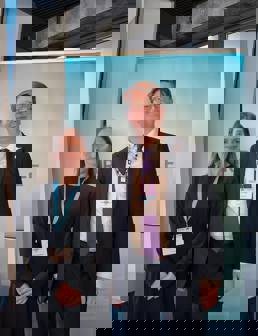
Alena Fedotova describes the Assembly as the world's largest event dedicated to issues concerning the Arctic and the North. For her, as an Indigenous peoples, the Karelian and the Sami, the sessions on the preservation of indigenous peoples, the Arctic economy and climate change gave her an even greater understanding that Arctic issues must be addressed comprehensively. International cooperation is currently the only way to solve the problems of the Arctic, and one of the countries that actively participates in the life of the Arctic region and is open to cooperation at all levels is Korea.
The session “Connecting the Poles – Lessons From Early Career Science Network" was an example of how important international communication between students and academics is. Alena told about her participation in the 11th Korean Arctic Academy, during which she gained her first experience of participating in international conferences. Participating in the Academy gave her an understanding of how important the role of Asian countries is in solving the problems of the north. Many people suppose that only northern countries should be interested in Arctic issues, but southern countries are not only the main areas of international trade, but also a place for open and diplomatic discussion, where young scientists can cooperate and be supported in many ways – financial, scientific and networking.
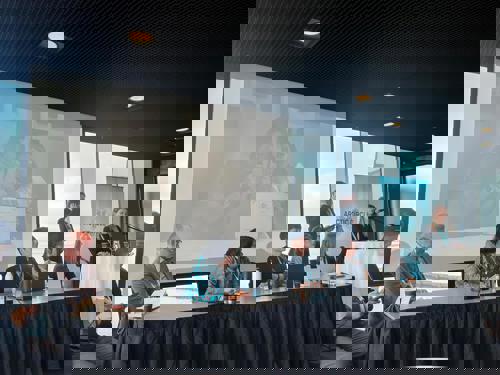
The purpose of Alena's trip was to learn more about the fundamental problems of the Arctic and aspects of international cooperation, including trade. She also participated as an audience member in sessions on ‘Global Innovative Industrial Zone and Cooperation in Korea,’ ‘Navigating the New Reality: Arctic Sea Routes and Eco-friendly Shipping,’ and ‘Bridging Waters: Science Diplomacy and Governance of the Arctic High Seas.’ Reflecting on her participation in business sessions and international trade sessions, Alena realised how important it is for businesses and governments to support young scientists' projects and initiatives. The solution to many problems can be found in young talent and the energy with which they are willing to participate. During the Assembly, Alena met activists of Indigenous organisations, as well as PhD scientists who shared their projects in the Arctic region.
The grant to participate in the trip gave Alena the opportunity to meet other talented and active scientists and students, just like herself, so that in the future she could work on solving the problems of preserving indigenous peoples and rebuilding international diplomacy in cooperation with like-minded people. Financial support from the Uarctic gave Alena the opportunity to see the current state of the Arctic and helped her make a clear decision about her mission.
“I believe that for diplomacy, we need young activists and scientists who can look at things from different perspectives. The consequences of the problems in the North will sooner or later lead to the extinction of indigenous peoples and languages and the disappearance of entire cities and regions in Asian countries, so now more than ever it is important to support specialists who have a comprehensive understanding of the region.”