
Gender and Disaggregated Data in the Arctic Region

A study, Gender Equality in the Arctic Phase IV: Study on Gender and Disaggregated Data in the Arctic Region, has been released under the Arctic Council’s Sustainable Development Working Group.
The report underscores a critical challenge: the persistent lack of regionally comparable sex and gender-disaggregated data across the Arctic, which hampers informed policymaking and equitable development. Compiled by an international team of researchers, the publication highlights how gender-sensitive data is essential for addressing al spheres in norther communities including social inequalities, decision-making, and health and wellbeing of people and planet. It stresses that gender statistics go beyond binary sex categories, reflecting deeper social dynamics and intersectional factors such as ethnicity, age, and socioeconomic status.
Key recommendations include:
- Developing a circumpolar list of gender-relevant indicators and an Arctic Gender Equality Index.
- Establishing a centralized Arctic database for harmonized disaggregated data.
- Integrating gender mainstreaming into all research phases and policymaking.
- Applying EMBLA principles for equitable and inclusive data co-production with Arctic communities.
The report also calls for combining quantitative, qualitative, and traditional knowledge systems to ensure culturally sensitive and thus relevant research as well as results. Without these measures Arctic governance risks reinforcing inequalities and missing opportunities for sustainable development.
This study marks a step toward closing sex and gender data gaps and advancing intersectional gender equality in one of the world’s most rapidly changing regions.
The study is part of the activities of the Thematic Network Gender in the Arctic Knowledge Production.
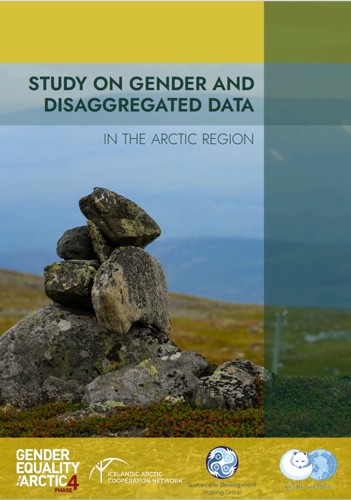
Read more about the Report here.
Read more abou the Gender Equality in the Arctic Phase IV.