
Landmark 2025 Arctic Report on Biodiversity, Governance, and Protective Measures

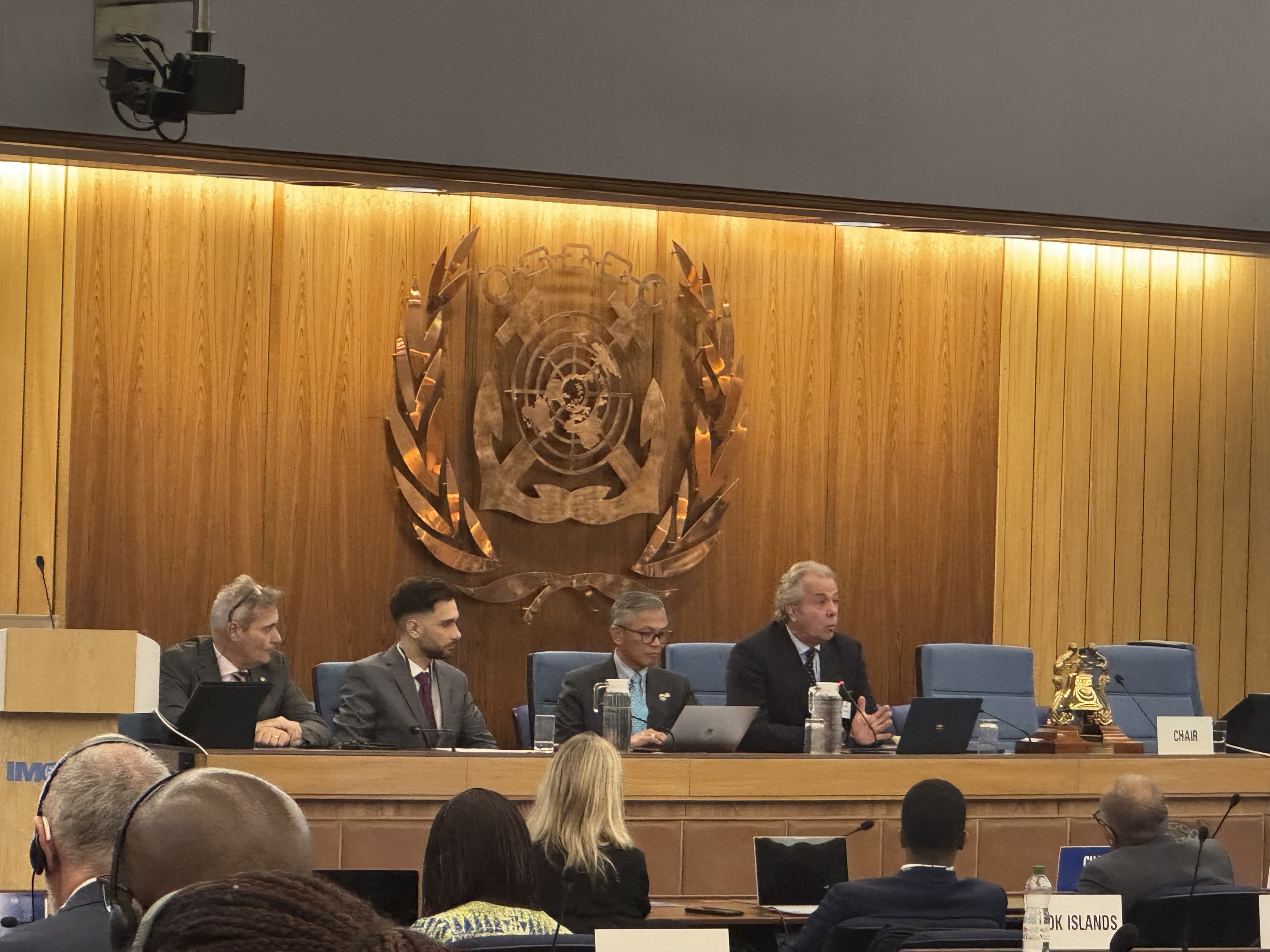
UArctic Chair in Search and Rescue (SAR), Professor Dimitrios Dalaklis, Head of Maritime Safety and Environmental Administration (MSEA) Specialisation at the World Maritime University (WMU) is pleased to announce the formal launch of a 2025 Arctic Report, under the title: “The Arctic Ocean Region: Biodiversity, Governance and Protective Measures.” The event took place on the 2nd December 2025, at the International Maritime Organisation’s (IMO) Headquarters, in London, during the Assembly’s 34th session. The report was authored by WMU PhD Candidate Antonios Andreadakis, Dr Graeme Chesters of 90 North Foundation, and WMU Professor Dimitrios Dalaklis; it combines expertise from both WMU and the 90 North Foundation.
During his opening remarks, Professor Maximo Q. Mejia, Jr, President of the World Maritime University, emphasized the importance of interdisciplinary collaboration and global engagement by highlighting that, “The Arctic is at the forefront of profound transformations driven by climate change, industrial activity, and shifting geopolitical dynamics. The challenges of Arctic governance demand the integration of science, policy, cultural perspectives, and Indigenous knowledge. This report reflects the shared commitment of WMU and the 90 North Foundation to developing forward-looking frameworks that protect fragile Arctic ecosystems while fostering sustainable development.”
The report warns that the Arctic Ocean, perceived as remote and inaccessible, is now experiencing profound environmental, economic, and political transformation. As climate change accelerates ice melt and opens new navigation and resource extraction opportunities, the region faces unprecedented ecological and cultural threats. The report highlights that Arctic ecosystem possess unique characteristics: slow recovery rates, highly specialized biodiversity, and extreme seasonal variations. These traits make them exceptionally sensitive to disturbance from industrial activity and climate change.
Indigenous communities, who have sustainably lived in and cared for the Arctic for thousands of years, are among those most at risk. The report outlines the existential pressures these communities face, including threats to food security, cultural continuity, and territorial sovereignty. Industrial-scale operations often proceed without meaningful Indigenous consultation, further exacerbating social and environmental inequities.
To confront these urgent challenges, the report advocates for the development of a cohesive, adaptive, and science-driven governance framework for the Arctic Ocean. By integrating existing designations with new protective measures, the report outlines a pathway for safeguarding the Arctic as a haven for biodiversity and a region of peaceful international cooperation. The full text of the Report is available here: 2025 Arctic Report: The Arctic Ocean Region – Biodiversity, Governance & Protective Measure
The World Maritime University (WMU) in Malmö, Sweden is established within the framework of the International Maritime Organization (IMO), a specialized agency of the United Nations. The mission of WMU is to be the world centre of excellence in postgraduate maritime and oceans education, professional training and research, while building global capacity and promoting sustainable development. WMU’s vision is to inspire leadership and innovation for a sustainable maritime and oceans future. WMU is an organization by and for the international maritime community and is committed to the United Nations 2030 Sustainable Development Agenda.
The 90 North Foundation (UK Charity No. 1194573) is dedicated to advancing biodiversity conservation, scientific research, and peaceful international cooperation within the Central Arctic Ocean.