
UArctic-supported EXTREME project brings art and science together in Reykjavík symposium

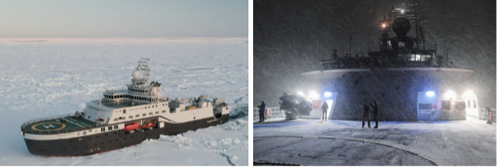
Figure 1. Slush on the edge of the Arctic sea ice, November 2025.
PHOTO: Michael KjærBeyond the Polar Night: An Art & Science Exploration of Extreme Marine Environments in the Arctic will take place at the Nordic House in Reykjavík on 9 October 2026. The interdisciplinary symposium is organised as part of the UArctic-supported EXTREME project, which brings together researchers and artists to develop new approaches to studying and protecting extreme environments in the Arctic and beyond.
The event will explore the deep-marine environments of the Fram Strait, a region shaped by the Polar Night’s darkness, rapid climate change, and growing scientific, industrial and economic interest in the ocean floor. Through talks, audiovisual works, and live performances, participants will consider how art and science can offer new ways to understand deep-sea environments that are increasingly affected by human activity.
From exploration to protection
The symposium builds on the EXTREME25 research expedition, conducted aboard the
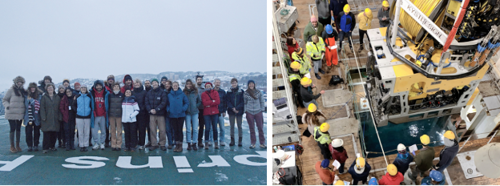
research vessel Kronprins Haakon in November 2025. During the expedition, researchers and artists travelled from Svalbard into the Polar Night and the deep waters of the Fram Strait. Their work drew attention to the rapid changes affecting the Arctic, from projections of an ice-free Arctic summer by 2050 to growing interest in deep-sea mining in fragile marine habitats. Read more about the journey in the UArctic article, Extreme 2025 Expedition: A Polyvocal Narrative to Reimagine and Protect the Arctic’s Extreme Environments.
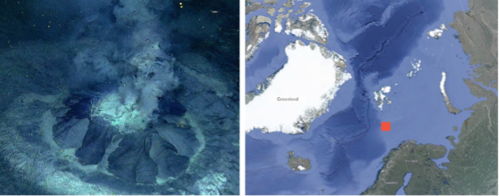
This research has revealed how little is still known about extreme deep-sea environments and how closely geological processes, methane, ecosystems and biodiversity are interconnected. One example is the Borealis Mud Volcano in the Barents Sea, where scientific investigations have shown that an active methane-rich environment can also provide a sanctuary for vulnerable Arctic species. Its ecological significance is now strengthening the discussion around the need to protect exceptional deep-sea habitats such as this.
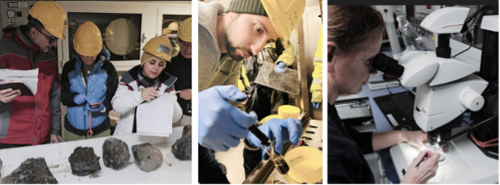
But EXTREME goes beyond scientific discovery alone. By bringing artists into the field
alongside researchers, the project explores how these environments can also be observed through image, sound, movement, narrative and sensory experience. These different forms of attention can reveal dimensions of the Arctic deep sea that scientific measurements alone may not communicate, while also raising questions about how knowledge shapes how environments are valued and protected.
This raises a central question for the symposium: how can exploration help protect the environments it studies?
The question is particularly urgent in the Arctic, where environmental change is happening rapidly while scientific knowledge of many deep-sea ecosystems remains limited. Understanding these environments before they are altered can help make their ecological value visible and provide a stronger basis for decisions about how to manage and protect them.
Extreme environments, including very cold waters, deep-ocean habitats, hydrothermal vents and cold seeps, present challenging conditions for life while attracting growing scientific, industrial and economic interest. The symposium therefore brings art and science into dialogue to examine not only how knowledge about these environments is produced, but also how it is shared, interpreted and used. By bringing together different ways of observing, documenting and understanding the Arctic, the symposium asks how knowledge can contribute to more responsible relationships with environments and species that remain largely out of sight.
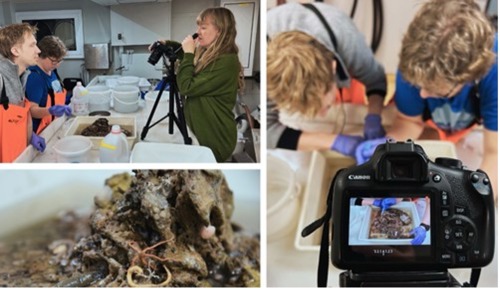
Director of the Institute of Polar Science at the National Research Council of Italy, who led the project and expedition, the value of this research lies in bringing different forms of expertise together:
Time: 13:00–16:00
Venue: The Nordic House, Reykjavík
approach to studying extreme environments in Arctic regions and beyond. The project is
supported by UArctic under grant UA 06/2024 and runs from 1 January 2025 to 31 December 2026.
Geosciences; the University of Copenhagen, Department of Arts and Cultural Studies; and the University of Iceland Research Centre in Þingeyjarsveit.
To learn more about the EXTREME project, visit the project website and follow the
project on Instagram: @extremes_arctic.