
Strengthening Arctic Emergency Management: the 2025 Conference Report is out

In March 2025, UArctic contributed to the Arctic Emergency Management Conference, the first international conference dedicated to a holistic view of Arctic emergency management.
About the Arctic Emergency Management Conference
Arctic Emergency Management Conference was part of the official program of the Norwegian Chairship of the Arctic Council (2023-2025). Now the Conference Report is out and you can find it here.
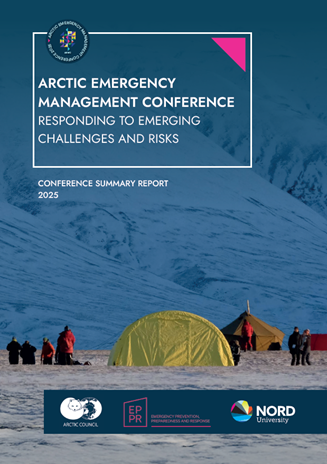
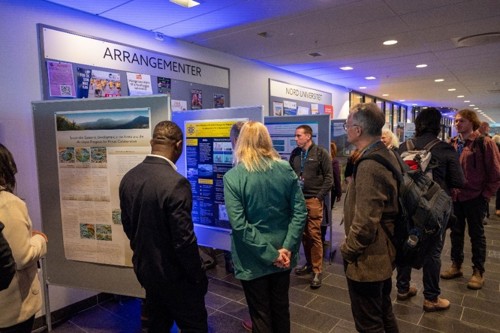
Held in Norwegian city of Bodø at the campus of Nord university, the conference featured over 55 dedicated plenary, keynote and thematic sessions on the topics of search and rescue, health preparedness, wildland fires, marine environmental response, radiological and nuclear preparedness, and community preparedness. The conference summary report summarizes all sessions, including the exhibition and poster session organized by Nord University, Center for Crisis Management and Collaboration – Nordlab, which introduced 25 posters and 15 booths showcasing key research on and innovations in emergency management in the Arctic and beyond.
UArctic involvement
The UArctic Thematic Network on Arctic Safety and Security contributed as members of scientific sub-committee to review and select the abstracts for oral and poster presentations. The sub-committee included experts from University College Copenhagen, Memorial University Newfoundland, University of Iceland, World Maritime University, Lappeenranta-Lahti University of Technology, and Nord university. Nord university has a liaisoning role in Arctic Council’s EPPR Working Group, as a lead of the UArctic Thematic Network on Arctic Safety and Security, and also took part in the conference programme committee.
Norwegian Arctic Council Chairship’s overarching goal associated to the conference was to strengthen cooperation on emergency preparedness and safe shipping in the Arctic. From the perspective of Arctic universities, the goal was successfully achieved. A novel practice of displaying work of both young and experienced researchers and practitioners together, contributes to safety of communities, inclusiveness and enhances trust between authorities, academia and practitioners. Bringing in discussions about contemporary research and innovation from Arctic universities throughout the sessions and lightning speeches at the poster displays in the main program, was an important milestone for such conferences – academia, practice and governance became one step closer to each other. Moreover, holding the entire conference on a university campus infused the event with a sense of youthful energy and fresh perspectives.
One of the conclusions from the Arctic emergency management conference was that challenges across all of the thematic areas in emergency management require local, regional and international collaboration. The conference emphasized the importance of creating venues for cooperation and knowledge sharing to enhance Arctic emergency management and resilience. The conference highlighted the necessity of integration of Indigenous knowledge and competence of local communities.
University of the Arctic, which was also created after the initiative of the Arctic Council, plays an important role in such cultural and expertise inclusiveness, with it’s mission to develop knowledge to address local and global challenges of relevance to Arctic peoples and societies by providing unique educational, research, and innovation opportunities through collaboration within a powerful network of member institutions.
The kingdom of Denmark, in its Chairship of the Arctic Council, has outlined its priorities for 2025-2027. Under “Oceans” priority, the focus within emergency preparedness remains on strengthening cooperation on emergency preparedness and shipping in the Arctic Particular attention is given to assessing current response capabilities, identifying future needs, and addressing research gaps to enhance incident preparedness for Arctic countries, incorporating Indigenous Peoples’ Knowledge and Arctic communities.
As a collaborative partner in Arctic emergency preparedness, the UArctic Thematic Network on Arctic Safety and Security contributes meaningfully to shared priorities across the region. Continued focus on information exchange, joint inter-disciplinary analyses, and inter-agency collaboration in Arctic emergency management is essential — highlighting the importance of interconnectedness in prevention, preparedness, and response efforts across the region.
Contacts:
Natalia Andreassen natalia.andreassen@nord.no
Rune Elvegård rune.elvegard@nord.no