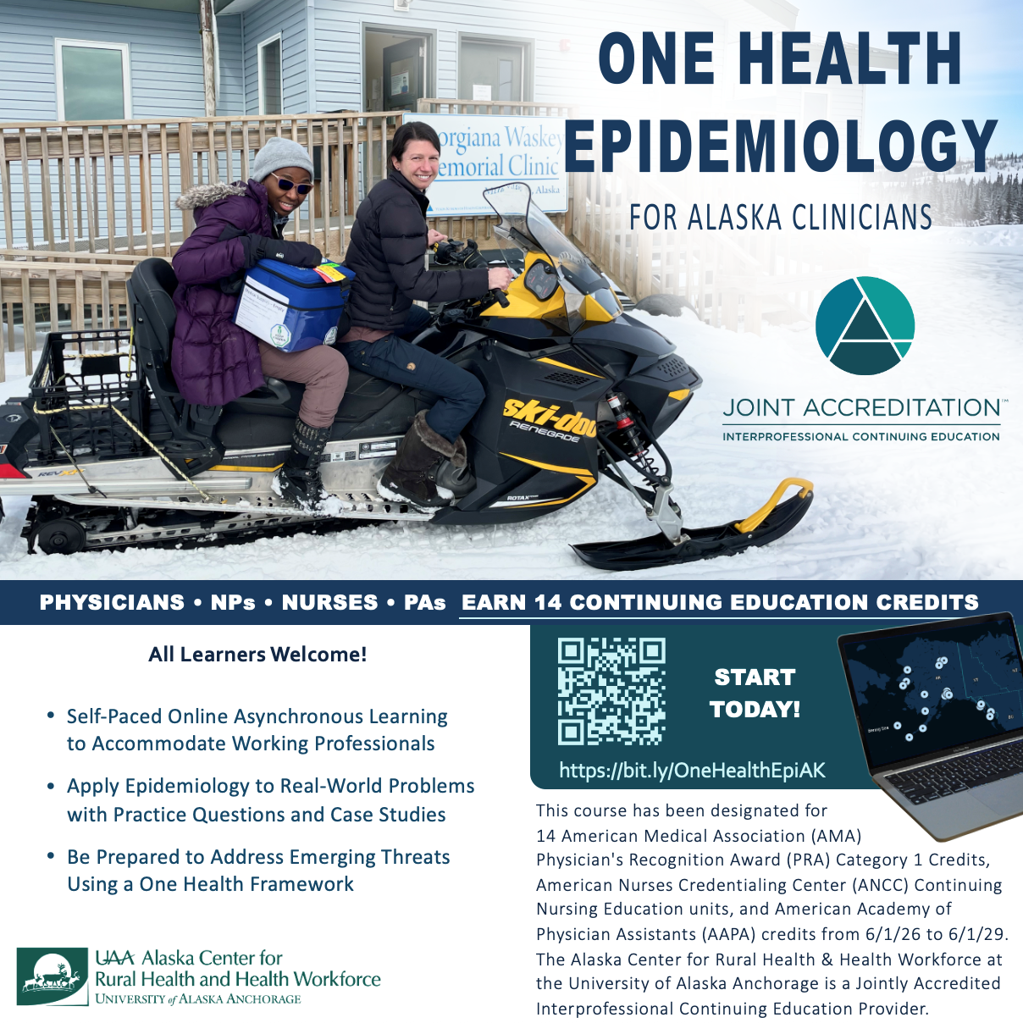
Online course available: One Health Epidemiology

The course introduces the foundational principles and methods used to study the distribution and determinants of disease in human and animal populations. This online asynchronous self-paced course is open to anyone - no university enrollment is required.
Description
The Arctic is warming three to four times faster than the rest of the planet, and rural communities in Alaska rely on and live closely with animals. This makes communities particularly vulnerable to climate change impacts, including emerging infectious diseases in both animal and human populations. In today's landscape, clinicians able to apply a One Health framework—the understanding that the health of humans, animals, and ecosystems are interconnected—will be better prepared to meet the challenges ahead.
Whether you're a veterinarian managing a reindeer herd or a nurse practitioner caring for individual patients, the principles needed to test for, analyze, and respond to emerging threats are transferable across disciplines.
One Health Epidemiology introduces the foundational principles and methods used to study the distribution and determinants of disease in human and animal populations. Through real-world examples, students learn to analyze data, assess risk, evaluate study designs and preventive health interventions, and monitor emerging health threats. Emphasis is placed on climate change impacts in the Arctic and how epidemiology can guide community-level action to improve outcomes for humans, animals, and the environment.
Target audience
This online asynchronous self-paced course is open to anyone—no university enrollment required. Nurses, NPs, Physicians, PAs, and other licensed healthcare professionals can take this evidence-based course to earn 14 Jointly Accredited Interprofessional Continuing Education credits, but anyone can take the course. If you don't need CME/CEUs, you can still earn a certificate of completion to demonstrate your learning.
Click here to learn more and register