
Student report from UArctic Congress 2026: Sunniva Sheffield

Sunniva Sheffield, a PhD Candidate at the Norwegian University of Life Sciences, shares participant experiences and insights from the UArctic Congress 2026.
I am a PhD Candidate at the Norwegian University of Life Sciences (NMBU), working in the Resource Recovery Group within the Faculty of Science and Technology. My research is part of the Horizon Europe project ArcSolution, which focuses on reducing pollution in the Arctic.
When discussing Arctic pollution, attention is often directed toward climate change, shipping, or plastic waste. However, municipal wastewater is another significant and often overlooked source of contaminants entering Arctic fjords every day. My research investigates the current status of wastewater treatment technologies used in the Norwegian Arctic, with a particular focus on understanding existing treatment systems and their performance. This knowledge will help support the future development of technologies capable of removing micropollutants from wastewater before they reach sensitive Arctic environments.
The purpose of my travel was to present the results of my first research paper and introduce my PhD project to the Arctic research community. My work builds upon a foundational review article by Pernille Jensen and colleagues, which provided a comprehensive overview of domestic wastewater treatment in the Arctic. Inspired by this work, I wanted to contribute additional knowledge by examining the specific treatment technologies currently in operation and their treatment efficiencies. The UArctic Congress provided a unique opportunity to share these findings, engage with researchers working across Arctic disciplines, and build connections within both the Arctic and water and wastewater research communities.
Attending the Congress had a significant impact on my development as an early-career researcher. One of the highlights was meeting Pernille Jensen and several of her colleagues in person. Having the opportunity to discuss my work with researchers whose publications have directly influenced my project was incredibly valuable. Presenting at my first conference as a PhD candidate was also an important milestone. Preparing and delivering my presentation helped me refine my research narrative, communicate my findings more effectively, and receive constructive feedback from experts and peers. I was encouraged by the positive response to my presentation, including insightful questions, compliments, and discussions about potential future collaborations.
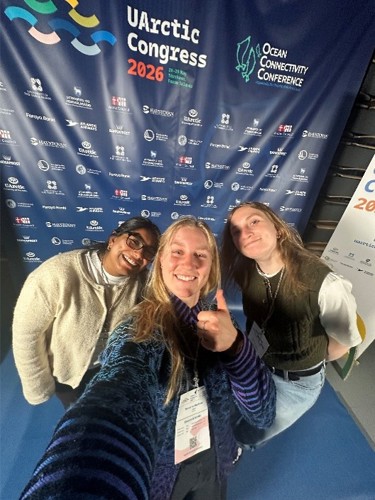
What made the UArctic Congress particularly meaningful was its Arctic focus. While I may have other opportunities to attend conferences dedicated specifically to wastewater treatment technologies, the Congress allowed me to place my research within a broader Arctic context. Hearing perspectives from researchers working across disciplines deepened my understanding of the challenges facing Arctic communities and strengthened my motivation to ensure that my research addresses real environmental needs.
An especially valuable and unexpected outcome was becoming connected with the UArctic WASH thematic network. Before attending the Congress, I often felt isolated in my research area and uncertain about how to build a professional network focused specifically on Arctic water and wastewater challenges. Through the Congress, I connected with researchers who share similar interests and who are enthusiastic about exchanging ideas, collaborating, and supporting one another's work. Knowing that there is now a community of experts interested in my research has increased both my confidence and my motivation.
These new connections will continue to benefit my research and career development long after the event. The network provides opportunities for collaboration, knowledge exchange, and participation in future activities such as summer and winter schools, workshops, and potential research visits. Just as importantly, it has given me a community of colleagues to learn from and engage with as my research progresses.
The UArctic travel grant made all these opportunities possible. Without this support, I would not have been able to attend the Congress, present my research, or build professional relationships that will help shape the future of my PhD and career. I am deeply grateful for the opportunity and look forward to continuing my involvement in the UArctic community.
The travel grant was funded by the Nordic Council of Ministers and UArctic.